
Lines of Freedom: Indian Women Cartoonists in the Age of Copyright, Digital Media and AI

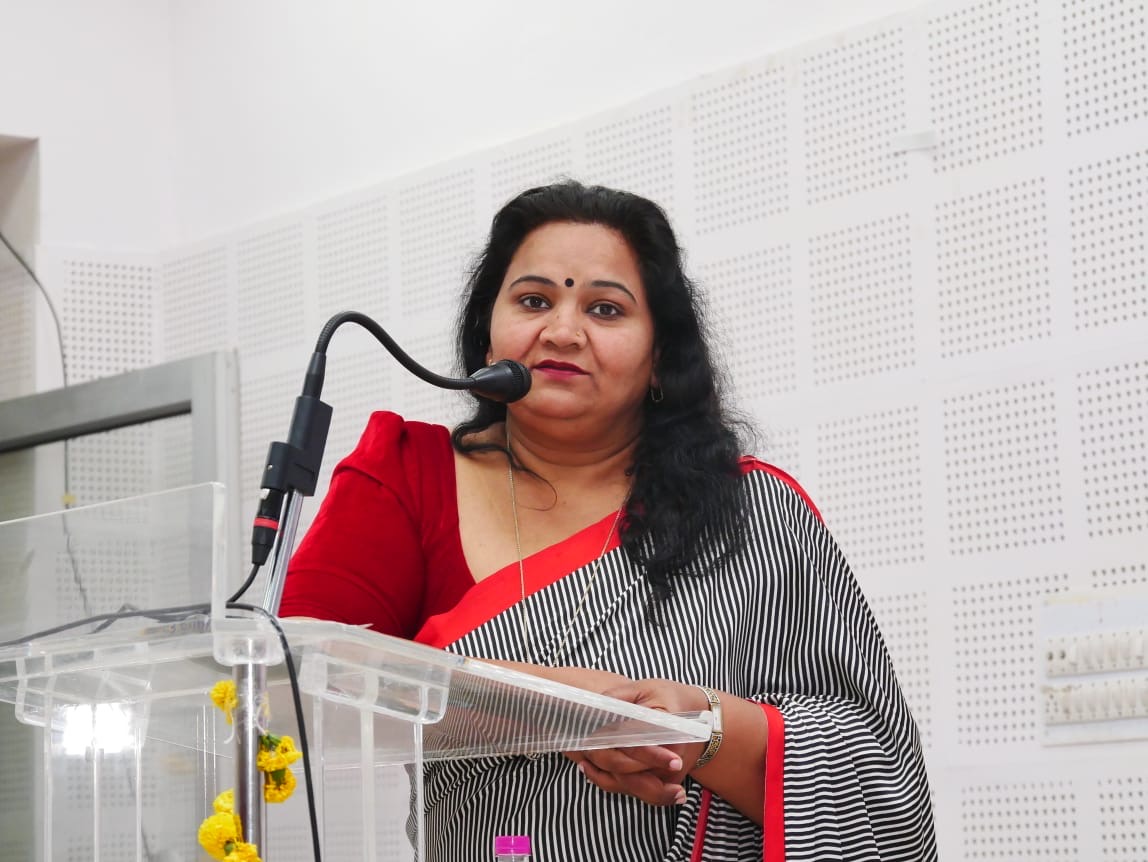
Dr. Veena Bansal
World Cartoonist Day is not merely a celebration of humor, satire, and drawing; it is also an occasion to recognize the power of expression, dissent, and creative freedom in a democratic society. Cartoon art has always engaged with power, society, and time. In the Indian context, however, this field remained male-dominated for a long period. Despite this, contemporary Indian women cartoonists have given new meaning to the medium through their vision, sensitivity, and intellectual strength. Today, their lines are no longer confined to entertainment. They have become a visual language of social critique, gender justice, identity, memory, democracy, and civil rights.
The contribution of Maya Kamath remains especially significant in shaping the identity of Indian women’s cartooning. In the 1990s, her editorial cartoons in mainstream newspapers offered sharp commentary on power, corruption, social inequality, and gender concerns. Her work established that cartoons are not simply light humor but can serve as a powerful medium of intellectual resistance and public discourse.
In the digital era, Rachita Taneja has extended this legacy through webcomics that address democracy, dissent, freedom of expression, and feminism in simple yet highly effective visual forms. This shift is important because digital platforms have taken cartoons beyond the editorial pages of newspapers and brought them directly to readers and wider civil society. In the field of graphic narratives and book illustration, Priya Kuriyan has offered compelling visual interpretations of women’s experiences, identity, memory, and social relationships. Together, these practices show how the journey of Indian women cartoonists has expanded from print to digital, from personal expression to collective engagement, and from humor to broader social commentary.
Contemporary Indian women cartoonists are active across diverse media and themes. Rachita Taneja continues to comment on democracy and freedom of expression through webcomics, while Priya Kuriyan gives visual form to women’s experiences through graphic narratives and book illustration. Neha Sharma, through social media comics, highlights urban life, relationships, and the emotional complexities of everyday experience.
In feminist comics and collective visual projects, Angela Ferrao addresses gender discrimination; Deepani Seth focuses on women’s safety in public spaces; Bhavana Singh explores identity and colorism; and Diti Mistry engages with social structures and gender relations. In the digital sphere, Stephy Ann Tomy reflects youth culture and everyday humor, while Aditi Mittal uses visual satire to challenge body politics, social stereotypes, and the public image of women. The mediums used by these artists—newspapers, book illustration, webcomics, Instagram, social media andindependent digital platforms reflect the layered and dynamic character of contemporary visual culture.
Digital platforms have given women cartoonists unprecedented visibility. Artists no longer need to depend solely on newspapers or institutional platforms to share their work. Through social media, webcomics, and digital publishing, they are independently reaching wider audiences and participating more directly in public discourse. At the same time, this new visibility brings new challenges. Women cartoonists continue to face limited editorial opportunities, online trolling, gender bias, political pressure, and forms of surveillance around expression. Satire, which remains an essential tool of democracy, often becomes the target of controversy, complaints, and digital attacks because of its ability to question authority and provoke debate.
In this context, the work of women cartoonists is not only creative but also deeply courageous. They transform personal experiences into public discourse and challenge deeply rooted social structures. Their work marks an important shift in the visual culture of India, where the cartoon is not only a humorous illustration but also a site of social intervention and critical reflection.
Under Indian copyright law, cartoons, illustrations, and drawings generally fall within the category of artistic works. The Copyright Act, 1957, provides protection to creative works, and this includes forms such as drawing, painting, sculpture, engraving, and photography. This means that an original cartoon is not merely a social media post; it is a form of intellectual property. The artist holds rights related to reproduction, communication, adaptation, and credit. Copyright also protects not only the economic interests of the creator but also moral rights, including authorship and integrity.
Yet in the digital age, the issue has become more complex. Cartoons are often downloaded, reposted, screenshotted, edited, or circulated without permission or proper credit. In many instances, the artist’s name, context, and ideological position are removed, and the work is redistributed with altered meaning. Such actions are not merely copyright violations; they also undermine the creative and intellectual identity of the artist.
The growth of AI-based image-generation tools has added another layer to this debate. The imitation of artistic styles, the use of artworks in training data without consent, and the increasingly blurred boundary between original and AI-generated work have made questions of creative ownership more urgent than ever. For women cartoonists, this issue is particularly significant since they have historically had to struggle for recognition, credit, and institutional visibility. In such a climate of copyright awareness, IPR protection, digital watermarking, licensing, and proper attribution have become integral to contemporary creative practice.
On World Cartoonist Day, it becomes especially important to recognize that Indian women cartoonists are not merely creating satire. They are shaping a new language of social awareness, democratic dialogue, and visual resistance. Their lines have moved far beyond humor to become voices of rights, dissent, memory, and identity. At a time when digital media, social platforms, and AI are rapidly transforming artistic practice, the protection of artists’ copyright, credit, and creative rights has become more necessary than ever. The creative journey of Indian women cartoonists reminds us that every line is not just an image – it is also a claim to thought, ownership, and freedom.
Associate Professor
Faculty of Visual & Performing Arts
Guru Kashi University, Punjab



The platform was created with a clear vision to deliver clean, fast and reliable news that reflects the true voice of Punjab. Read More…
Copyright 2026 Punjab News Daily.Com. All rights reserved
No Comments